

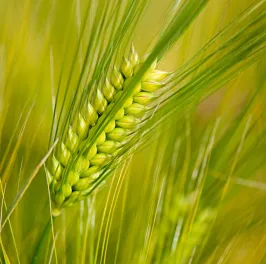
Barley
Variety selection, planting and growing insights for this cereal field crop.
Barley is an important cereal crop for farmers which has been cultivated globally for thousands of years. Part of the grass family Poaceae, barley’s scientific name is Hordeum vulgare.
Barley is a versatile crop which is used in various foods such as bread, cereals, and soups. One of its major uses is in the production of beer and whiskey and is also commonly used as livestock feed.
While there are many varieties, most commercial barley production focuses on a smaller number of cultivars – varieties developed through human intervention – optimized for specific uses (such as brewing and distilling) or for growing conditions (climatic adaptability). Barley can be grown in a wide range of environments and is known for its drought tolerance.
Guide to barley types

Two-row and Six-row hybrid
Two-row barley: Has two rows of seeds on each spike.
Six-row barley: Has six rows of seeds on each spike

Hulled and Hull-less
Hulled barley: The grain retains its outer hull after harvesting.
Hull-less (or naked) barley: The hull falls off during harvesting.
Spring and Winter
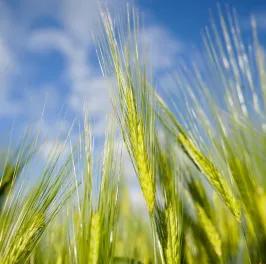
Spring barley: Usually planted in spring (in some situations, planted in fall) and harvested in late summer.
Winter barley: Planted in fall and harvested the following summer.

Malting and Feed
Malting barley: Used primarily for brewing and distilling.
Feed barley: Used mainly for animal feed.